
For governments across the globe, the shift to online services in place of manual service delivery promises not just a more efficient bureaucracy but a more open and accessible system for everyone.
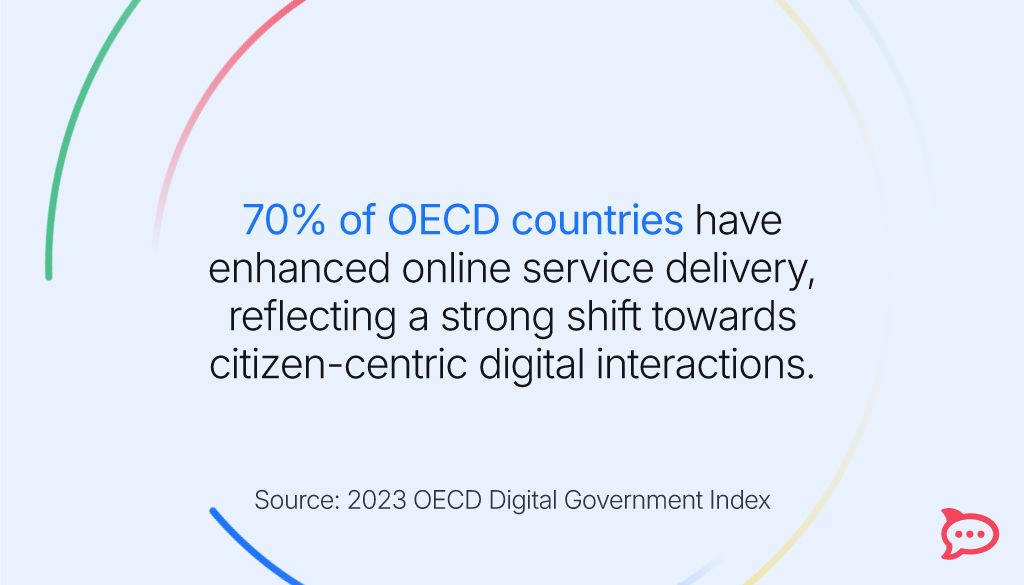
According to the 2023 OECD Digital Government Index, 70% of OECD countries have enhanced online service delivery, reflecting a strong shift towards citizen-centric digital interactions.
For instance, North Carolina's Digital Commons platform has streamlined access to government services, showcasing the potential of digital solutions to improve citizen engagement and service delivery.
However, the journey to digital governance faces challenges like reliance on legacy systems, inadequate digital infrastructure, budget constraints, and resistance to change.
This blog post will provide a comprehensive roadmap for navigating these challenges while highlighting the key factors that dictate the success of such initiatives.
01Digital government: Difference between digital optimization and transformation
Digital government initiatives can be categorized into two distinct approaches:
1. Digital optimization
This focuses on enhancing existing digital tools and processes. It aims to improve efficiency and performance within current systems, such as automating tasks or streamlining workflows.
- For example, a government agency might improve its website's user interface or streamline an online form submission process.
- While these optimizations can yield immediate benefits, they often fail to address deeper systemic issues.
2. Digital transformation
In contrast, digital transformation involves a comprehensive overhaul of government systems and processes. This strategy requires rethinking service delivery models and organizational culture to meet the evolving needs of citizens better.
A 2024 Deloitte survey highlights that customer satisfaction with digital government services is notably lower than that of private sector services.
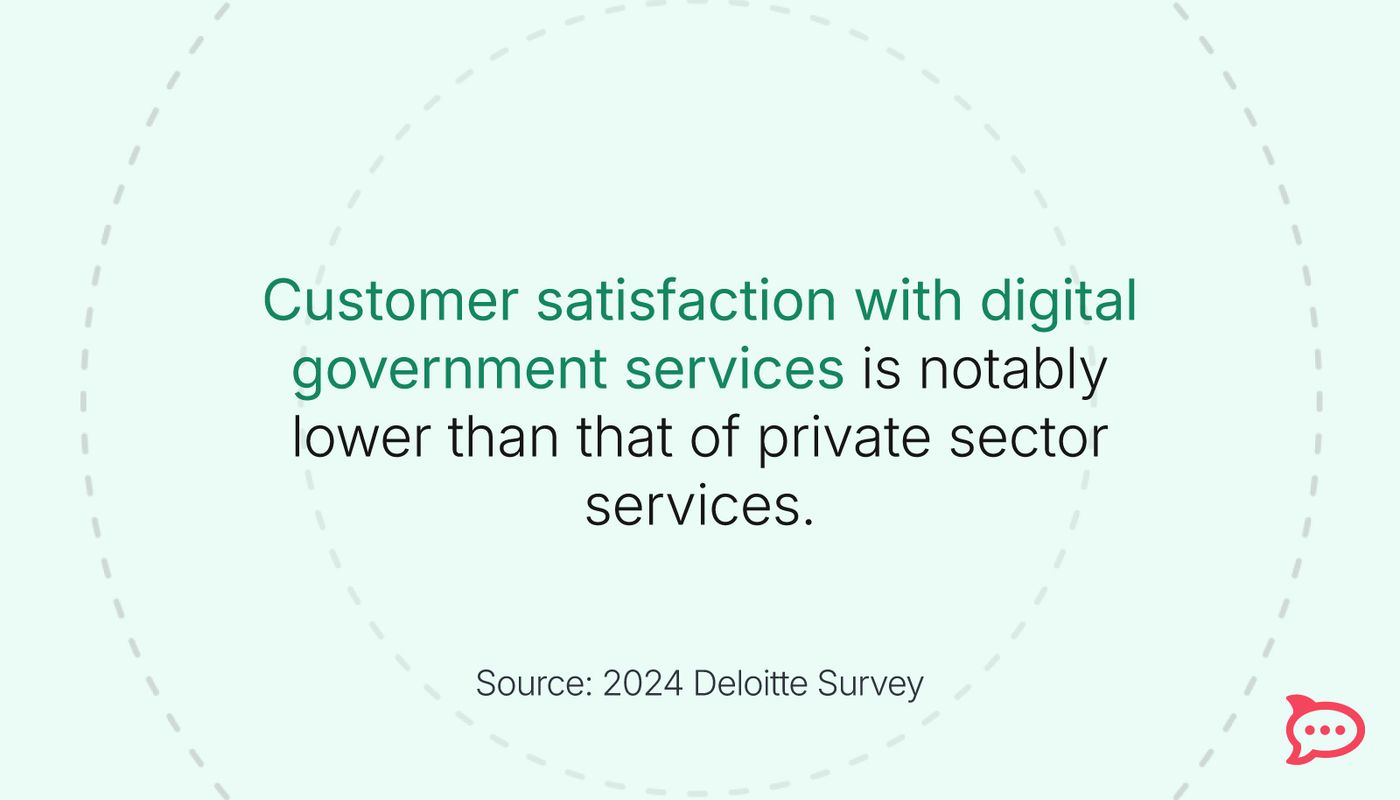
This emphasizes the urgency of the government's comprehensive digital transformation efforts.
02Digital government initiatives: 10 critical success factors
To seamlessly implement digital government initiatives, these critical factors must be considered:
1. Agile governance framework
Deloitte’s Government Trends 2024 report suggests that an agile governance model enables administrations to respond swiftly to changing citizen needs and technological advancements.
By employing agile methods, governments can deliver solutions in iterative steps, incorporate feedback, and enhance efficiency.
Example: After facing challenges with a traditional waterfall approach, the FBI successfully adopted agile to roll out a new case management system.
2. AI-driven decision-making
Artificial intelligence (AI) has become an invaluable tool in digital governance. Leveraging artificial intelligence enhances decision-making processes and improves service delivery efficiency.
AI-driven communication and collaboration platforms also significantly contribute to the overall impact of service delivery, as they streamline synergy between different government bodies.
Example: Allegheny County, Pennsylvania, has implemented an AI-supported tool to expedite the processing and storage of digital evidence, showcasing how AI can enhance efficiency and accuracy in public services.
3. Digital identity ecosystems
Robust digital identity systems are essential for seamless and secure access to government services.
By developing unified digital identity ecosystems, governments can streamline processes for citizens who would otherwise need multiple logins across various services. This saves time and improves data security, reducing the risk of identity theft and fraud.
Example: Estonia has implemented a comprehensive e-identity system that allows citizens to access over 600 public services using a single digital identity.
4. Cloud-native architecture
Adopting cloud-native solutions enhances scalability, flexibility, and cost-effectiveness in government operations.
Secure cloud collaboration services also enable rapid deployment and disaster recovery, which is critical for resilience and continuous service delivery.
Example: According to Gartner, 80% of governments will rely on cloud services by 2025, underscoring the importance of cloud-based infrastructure for digital transformation.
5. Cross-agency collaboration
Effective digital government relies on cross-agency collaboration and fosters inter-departmental cooperation to create integrated, citizen-centric services that transcend departmental silos.
Example: The U.S. government’s Cross-Agency Priority (CAP) Goals exemplify this approach, encouraging cooperation among agencies to streamline services.
6. Continuous skill development
The success of digital government depends heavily on a workforce that is proficient in new technologies.
Continuous skill development programs keep government employees up-to-date with the latest tools and practices, which is essential for the sustained progress of digital initiatives.
Example: The DIGIT (Digital Infrastructure for Governance and Inclusive Transformation) platform in India exemplifies how continuous skill development is integrated into government operations.
7. Ethical AI implementation
Ethical AI practices ensure transparency, fairness, and public trust, protecting citizens from adverse consequences that could arise from unregulated AI systems.
Example: The National Institute of Standards and Technology (NIST) has released an AI Risk Management Framework guiding the responsible use of AI in public sector applications.
8. Data-driven policymaking
Data analytics enables evidence-based policymaking, which helps governments address the specific needs of citizens.
Governments can make more informed decisions by leveraging data to identify trends, predict outcomes, and evaluate policy impacts.
Example: Barcelona has implemented a data-driven approach to urban planning through its Smart City initiative. The city collects data from sensors and IoT devices across urban infrastructure to analyze traffic patterns, air quality, and energy consumption.
9. Resilient digital infrastructure
Resilient infrastructure is necessary for the government’ cybersecurity and to overcome technological disruptions.
Governments must build secure, redundant systems to ensure uninterrupted service delivery, even in the face of cyberattacks or natural disasters.
Example: In the United States, federal agencies have been directed to adopt Zero Trust Architecture as part of their cybersecurity strategy.
10. Inclusive digital services
Governments must design digital public services that are accessible to all citizens, including those with disabilities or limited internet access.
By prioritizing accessibility, governments uphold their commitment to serving every citizen and fostering inclusivity in digital transformation.
Example: Canada's Digital Service Standard outlines specific criteria for developing inclusive digital services.
03Major challenges in digital government transformation
Despite the numerous benefits of digital government, governments encounter several challenges along the way:
- Budget constraints: Limited funding can prevent the initiation and sustainment of digital projects.
- Legacy systems: Integrating outdated systems with modern platforms is often costly, time-consuming, and difficult.
- Resistance to change: Some government employees may be hesitant to adopt new technologies.
- Digital skills gap: A shortage of digitally skilled workers poses a significant barrier to digital transformation.
- Organizational silos: Fragmented structures across departments complicate collaboration.
- Data security and privacy concerns: Protecting sensitive information while ensuring transparency remains a significant challenge.
04Why Rocket.Chat is essential for digital government transformation
Rocket.Chat emerges as a vital tool for facilitating successful digital government transformations due to its unique features:
- Secure communication and collaboration: With end-to-end encrypted messaging and granular access control, Rocket.Chat ensures secure data exchange and compliance with privacy regulations, providing robust organizational security.
- Flexible deployment options: Governments can choose between self-hosted or cloud-based deployments, accommodating various operational needs and regulatory requirements.
- Customizability: As an open-source platform and the most secure messaging app, Rocket.Chat allows public sector organizations to tailor functionalities as they see fit.
- Scalability: The platform is designed to scale alongside growing needs.
- Cost-effective solutions: The platform’s open-source nature benefits the public sector by allowing governments to access enterprise-level features without incurring prohibitive costs.
- Integrated tools: Rocket.Chat supports seamless integration with tools like AI-powered chatbots, CRMs, existing tech stack, and other essential applications.
05Advancing digital government: Building a responsive and citizen-focused future
As digital transformation accelerates, governments must invest in ethical, inclusive, and agile strategies. This involves establishing a citizen-centered governance model that meets 21st-century needs.
Platforms like Rocket.Chat facilitate this change by providing secure and customizable solutions for government chat, secure communication, and real-time collaboration.
Contact our team to learn more!