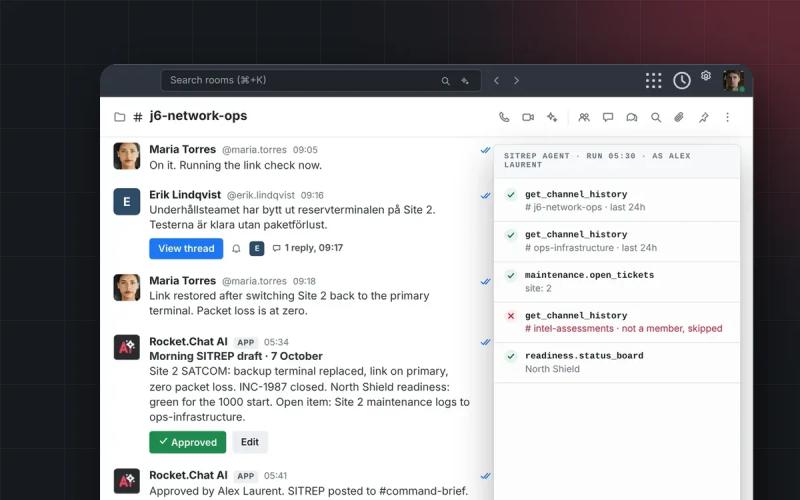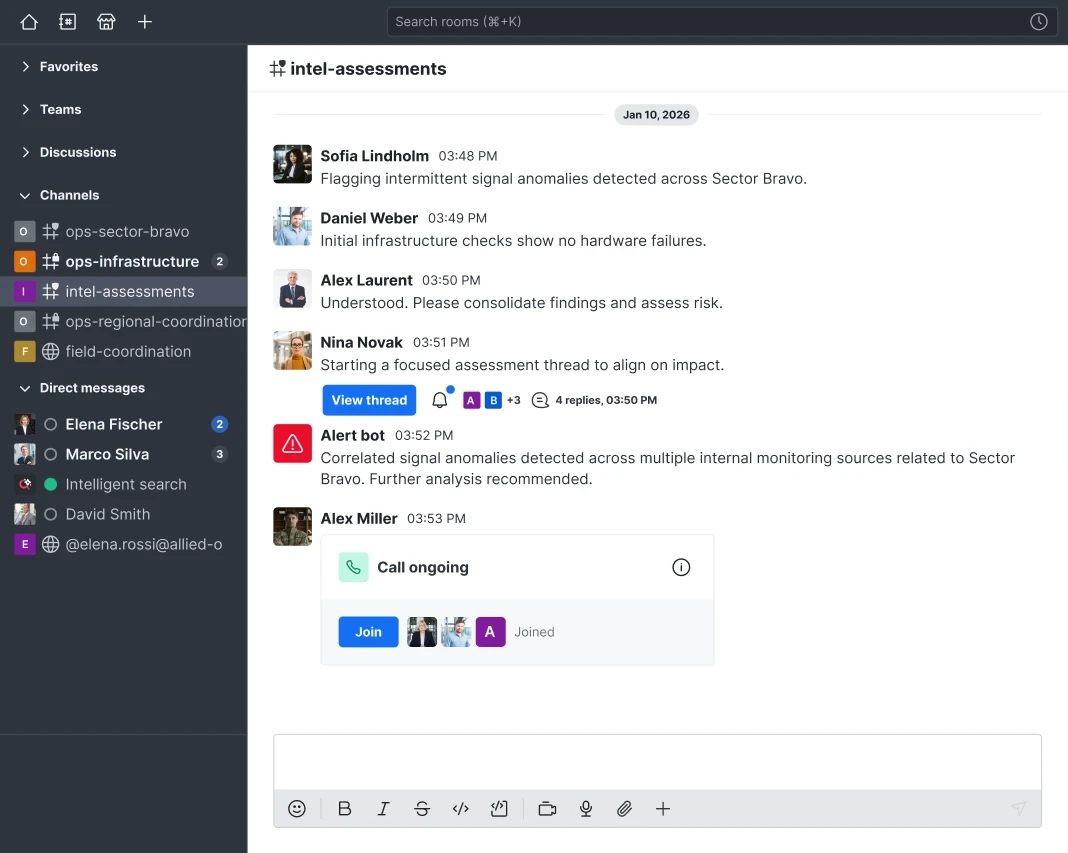
Just like flipping a coin, the more we advance with digital tools, the more cyber threats we face. It's a constant trade-off. That's why enterprises are adopting out of band communication to lock down critical systems and secure communication.
Moreover, would you believe your network is safe just because no alerts popped up? Or would you verify it?
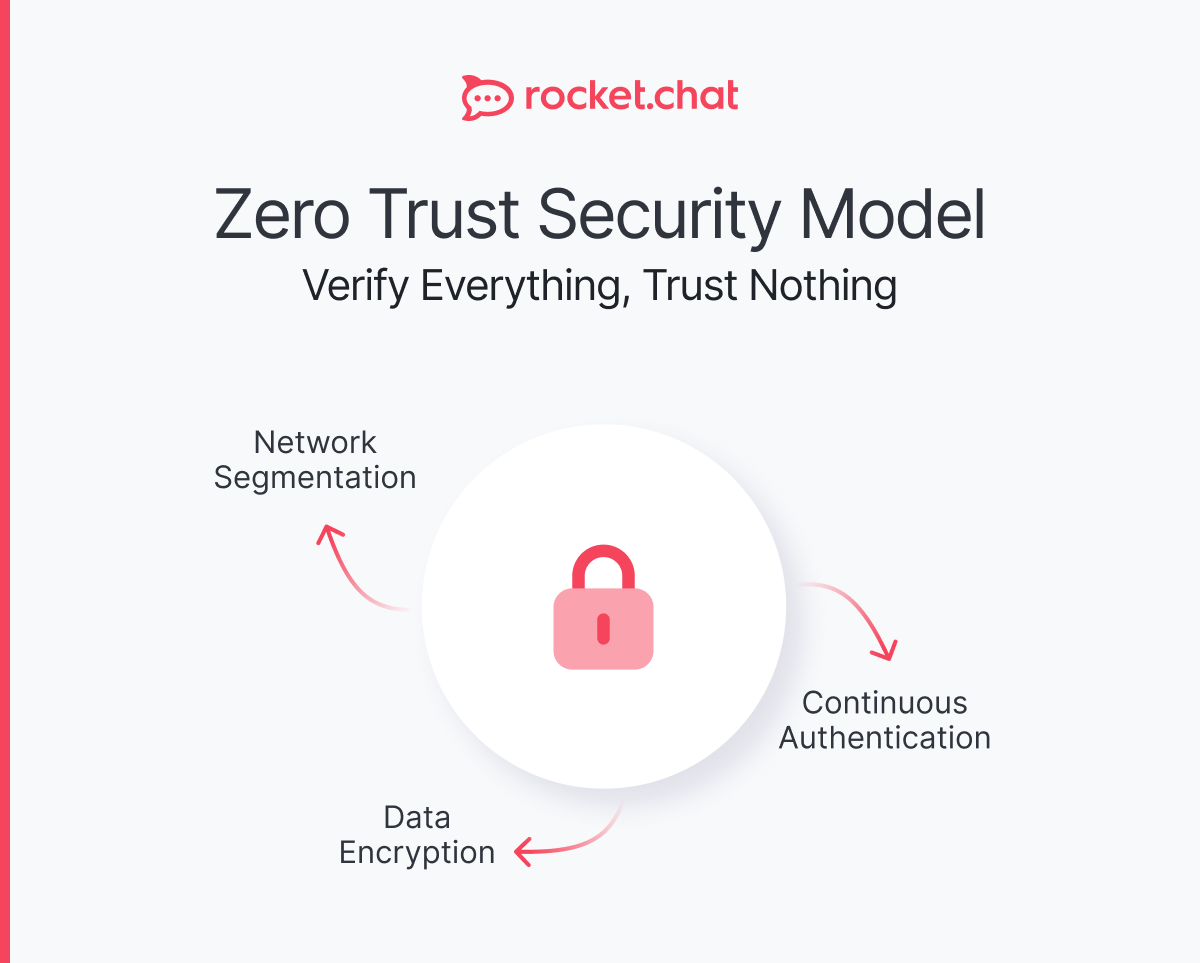
Zero trust operates on the same principle: assume nothing, verify everything. If you don't continuously validate your systems, breaches can happen without warning.
In 2024, the average cost of a data breach reached $4.88 million, a 10% increase from 2023. Experts argue that traditional security measures are not adequate for evolving threats.
However, out of band communication can reinforce zero trust frameworks. Even if attackers breach your primary network, they can't compromise your control systems.
Read on to see how OOB keeps your organization resilient against breaches.
01Why zero trust needs dedicated out of band channels
Do you rely on Slack or Microsoft Teams to manage security incidents? While these platforms are secure and adequate, there's one problem:
If attackers breach your network, they can control these platforms too. They can intercept alerts, block responses, and manipulate IT teams into thinking everything’s fine.
02Out of Band vs. In-Band Authentication Comparison
| Feature | In-Band Authentication | Out of Band (OOB) Authentication |
|---|---|---|
| Communication Channel | Same as primary network | Separate, independent channel |
| Security Level | Moderate – vulnerable if network compromised | High – remains secure even during breach |
| Attack Resistance | Susceptible to man-in-the-middle attacks | Resistant to MITM and credential theft |
| Examples | Password on same website, SMS via same carrier | Hardware token, separate authenticator app, phone call verification |
| Breach Impact | Complete compromise possible | Limited – attackers can't control OOB channel |
| Implementation Complexity | Low – single system | Moderate – requires separate infrastructure |
| User Experience | Seamless – one interface | Slight friction – multiple steps |
| Cost | Lower initial investment | Higher but justified by security gains |
| Recommended For | Low-risk internal systems | Critical systems, privileged access, sensitive data |
| Compliance Support | Basic requirements | Advanced frameworks (Zero Trust, NIST) |
Source: Industry security best practices and zero trust framework guidelines, 2024
What MGM's security failure teaches about cyber resilience
For example, cybercriminals posed as a current MGM employee and gained admin access to Okta and Azure environments. Though MGM deactivated key systems, attackers had enough access to deploy ransomware on 100+ ESXi hypervisors, crippling operations.
This breach forced MGM to shut down its reservation systems and critical operations for 10 days, costing the company $8.4 million per day.
MGM faced multiple lawsuits for failing to protect personally identifiable information, despite Okta's warnings about targeted social engineering attacks.
Can out of band communication channels prevent social engineering tactics? No, but they can prevent attackers from controlling the response once they're inside. Here's how:
- If MGM's security team had an OOB system, they could have coordinated responses without attackers listening in
- OOB shares critical alerts to decision makers, even if hackers disable or delay alerts in compromised systems
- OOB channels can verify high-risk actions separately, providing stronger multi-factor verification
03Embedding out of band communication in zero trust
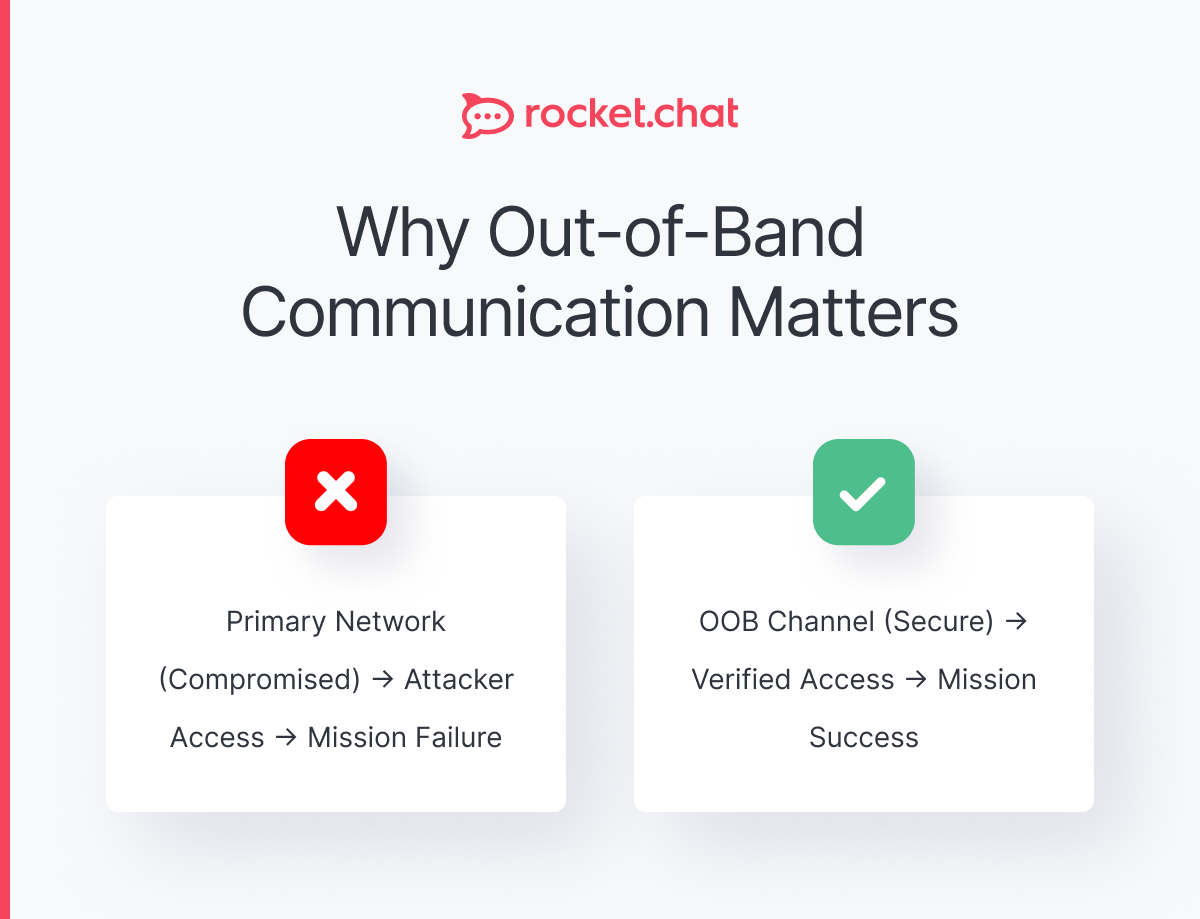
Out of band communication is a critical pillar of zero trust security, ensuring attackers can't manipulate endpoints and intercept sensitive data. To embed OOB effectively, follow these key strategies:
User authentication and authorization
With traditional authentication, attackers can steal credentials and hijack sessions, but OOB verifies users through a separate, secure channel, preventing unauthorized access.
Even if you use MFA, it's not foolproof if it relies on SMS, email, or other easily intercepted methods.
According to research, stolen credentials were the root cause of 22% of data breaches in 2024. In addition, 49% of breaches by external actors involved stolen credentials, and 41% of breaches affected mail servers.
Note that if an attacker gets access to your inbox, they can reset passwords and bypass MFA.
In contrast, OOB with advanced MFA uses independent channels like hardware tokens and secure mobile authenticator apps, making it harder to intercept.
Need for continuous verification and privileged access
Zero trust takes a step further by constantly verifying users, not just at login. Embedding OOB triggers additional verification based on risk levels.
For example, Google's Advanced Protection Program forces high-risk users to verify actions through a separate physical device, reducing unauthorized access attempts.
Device and endpoint security
Endpoints can be easily exploited through advanced phishing and malware. Out of band security mechanisms add an extra layer of protection by:
- Remote attestation: Verifying the integrity of a remote device's hardware and software configurations through independent channels. This helps detect unauthorized changes and system compromises.
- Hardware security modules: Managing cryptographic operations using isolated OOB channels. This ensures encryption keys remain protected even if the main network is compromised.
Many businesses are already adopting Hardware Security Modules (HSMs) to safeguard sensitive data. The global HSM market was valued at $1.56 billion in 2023 and is anticipated to grow at a CAGR of 16.3% from 2024 to 2030.
Additionally, recent research explores multi-channel deep attestation methods for independently verifying virtual machines and hypervisors.
Studies from universities and industry researchers highlight that hypervisors can provide the public key of the virtual machines they manage, enabling stronger linking and verification.
One study specifically presents a scalable approach for collective remote attestation in NFV environments.
With growing cyber threats, the demand for secure authentication and encryption solutions continues to rise.
Secure boot verification through OOB channels
Even with a secure boot, attackers can manipulate primary systems to inject unauthorized firmware. OOB verification strengthens this process by:
- Authenticating firmware through an independent, tamper-resistant channel
- Preventing boot-level malware from compromising system security
Network segmentation and monitoring
Attackers can bypass a flat network structure and move laterally once they gain access. OOB monitoring and segmentation strengthen security by isolating critical systems and detecting anomalies in real-time.
Moreover, OOB provides a dedicated control plane for managing firewall rules, access control, and incident response without interference.
Micro-segmentation for OOB communication infrastructure
In a zero trust architecture, isolating network zones further limits an attacker's ability to move laterally. When you combine micro-segmentation with OOB, you can:
- Restrict lateral movement: Even if an endpoint is breached, attackers cannot easily access other segments
- Enforce least privilege access: Systems only communicate with what's necessary, reducing exposure
- Enhance OOB authentication: Secure enclaves can verify access requests before granting permissions
Micro-segmentation and OOB communication align with zero trust principles by enforcing strict access controls and continuously monitoring user activity.
Researchers emphasize that you must evaluate your network architecture and access policies to implement an effective zero-trust model across dynamic environments.
04Data protection and access controls
Attackers always find ways to breach data even with strong access controls. They exploit weak key management, insider threats, and control plane vulnerabilities.
Out of band communication strengthens security by keeping encryption keys, access approvals, and control mechanisms separate from the main environment. This limits access and reduces the risk of compromise.
Why separate the data plane from the control plane
Separating the data plane from the control plane is a fundamental security measure to enforce stricter access controls and reduce the risk of unauthorized access.
For example, Google Cloud's External Key Manager secures encryption keys in an independent security module, and it's not easy for attackers to steal them, even if they breach cloud resources.
Cloud resources are the biggest targets for cybercriminals. According to the 2024 Thales Cloud Security Report:
- 30% target cloud storage
- 31% of attacks target SaaS applications
- 26% target cloud management infrastructure
The most worrisome insight is that most cloud data remains unencrypted.
On average, 47% of data stored in the cloud is sensitive, yet less than 10% of enterprises encrypt at least 80% of their cloud data.
While 65% of organizations say cloud security is a top priority, securing cloud workloads requires a stronger approach.
Integrating out of band communication with zero trust ensures strict control over encryption keys. This can help minimize risks even in the case of a breach.
05Implementation roadmap: practical steps for CXOs
Building a secure out of band communication system must ensure business continuity and minimize cyber risks. To get it right, you must follow a structured approach:
Assessment phase: identify critical systems for out-of-band protection
Not all systems need OOB security, so you must prioritize the most critical ones. Focus on:
- Privileged access management: Avoid insider threats by restricting high-level access to only essential users
- Encryption key management: Prevent cloud breaches by securing encryption keys, as most breaches occur due to mismanaged credentials
- Cloud control plane: Reduce attack risks by protecting configurations, identities, and access permissions across cloud environments
Planning stage: design a secure, redundant OOB architecture
A robust OOB system isn't just about separating encryption keys. It must be:
- Redundant: Ensure backup communication channels and failover mechanisms to maintain security
- Zero-trust enforced: Require strict identity verification and least-privilege access to prevent unauthorized control over critical systems
- Physically and logically separate: Keep OOB infrastructure independent from primary networks to minimize exposure to cyber threats
Deployment considerations: balance security with operational efficiency
A well-implemented out of band communication system shouldn't compromise efficiency for security. It must:
- Automate approvals: Reduce human delays by integrating OOB controls with automation tools
- Optimize workflows: Maintain strict security policies without disrupting workflows
- Monitor access in real-time: Use AI-driven anomaly detection to catch suspicious OOB access
Testing framework: validate OOB systems against real attack scenarios
A secure OOB system isn't truly effective unless it's tested against real-world attack scenarios. You must:
- Test insider threats: Ensure no single admin has unchecked access to encryption keys
- Simulate credential theft: Run penetration tests where attackers try to breach the control plane
- Run breach response drills: Test how quickly security teams detect and contain OOB-related breaches
06Strengthening security with Rocket.Chat
Out of band communication fortifies zero trust security, making it the ideal defense against cloud breaches and unauthorized access.
Rocket.Chat offers a secure, open-source collaboration platform with built-in compliance and advanced security. Key features include:
- End-to-end encryption
- Omnichannel communications
- 180+ role-based access controls
- Scalable microservices architecture
- Auditable communication and advanced tracking
- Collaboration in classified networks like NIPRNet
- Flexible deployments, including air-gapped environments
Organizations requiring mission-critical communications benefit from Rocket.Chat's robust security architecture that supports government communication needs and military messaging requirements.
The platform provides comprehensive communication security features that align with the NIST cybersecurity framework, making it suitable for government messaging applications and military chat deployments.
For organizations prioritizing workplace team communication security, Rocket.Chat delivers the most secure messaging capabilities among instant messaging platforms.
Want to future-proof your zero trust strategy? Reach out to our team to learn more.
Frequently asked questions
What is out of band communication in cybersecurity?
Out of band communication refers to a separate, independent communication channel that operates outside the primary network infrastructure. In cybersecurity, OOB channels provide secure authentication, verification, and control mechanisms that remain functional even if the main network is compromised, strengthening zero trust security frameworks.
How does out of band communication prevent credential theft?
OOB communication prevents credential theft by requiring verification through an independent channel separate from the primary authentication system. This means that even if attackers steal login credentials, they cannot bypass the additional verification layer that operates on a different communication path, significantly reducing the risk of unauthorized access.
What's the difference between in-band and out of band authentication?
In-band authentication uses the same communication channel as the primary network connection, while out of band authentication uses a completely separate channel. For example, receiving a verification code via SMS or authenticator app while logging in through a web browser is out of band, whereas entering a password on the same website is in-band.
Can out of band communication work with existing zero trust frameworks?
Yes, out of band communication integrates seamlessly with existing zero trust frameworks by providing an additional verification layer. OOB channels complement zero trust principles of "never trust, always verify" by offering independent authentication paths, encrypted key management, and isolated control planes that enhance overall security posture.